





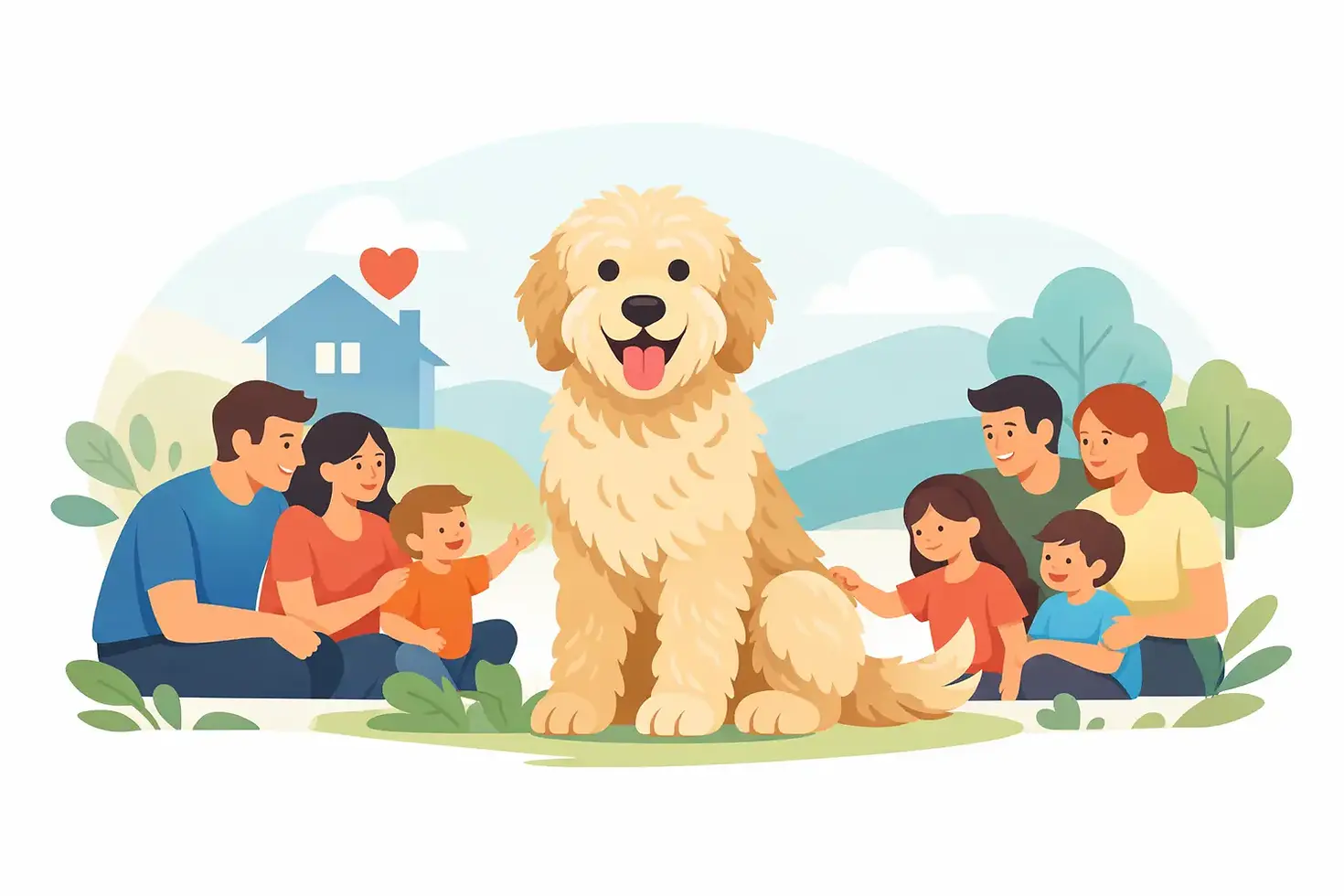
Goldendoodle Personality Matching for Families
A puppy who happily greets every visitor may be perfect for one household and overwhelming for another. A quieter puppy who watches before joining the fun may be a wonderful fit for a calm couple, but not the best choice for a family hoping for an enthusiastic playmate for active children. Goldendoodle personality matching families is about looking beyond coat color, size, and the first sweet photo to consider the kind of companion who will feel at home in your everyday life.
The goal is not to label one puppy as better than another. Each puppy has strengths. Thoughtful matching helps place those strengths with the family most likely to appreciate them, support them, and build a close relationship over time.
Why Personality Matters as Much as Size
Goldendoodles are loved for their affectionate nature, intelligence, and family-friendly potential. Still, no two puppies are exactly alike. Even within the same litter, one puppy may be outgoing and busy, another may be gentle and people-focused, and another may take a little more time to warm up in a new setting.
Size is a practical part of choosing a dog, especially for families considering petite miniature or micro-mini Goldendoodles. A smaller companion can fit comfortably in many homes, travel more easily, and be easier for children to handle with adult guidance. But size alone does not tell you whether a puppy is playful, easygoing, sensitive, confident, or especially eager to please.
A good family match considers the whole picture: the puppy's developing temperament, the parents' dispositions, early socialization, and the household the puppy will join. Responsible breeding begins with carefully selected, genetically health-tested parent dogs, but a breeder should also pay close attention to temperament. Health and personality both matter when a puppy is being raised to become a cherished companion.
Goldendoodle Personality Matching Families Can Trust
A meaningful match starts with honest conversation. Families should feel comfortable sharing what daily life actually looks like, not what they think it should look like. A breeder can offer more helpful guidance when they understand the rhythm of your home.
Consider your activity level. Do you picture long walks, weekend outings, training games, and plenty of playtime? Or are you looking for a loving dog who enjoys a moderate routine and quiet evenings nearby? Goldendoodles need engagement, companionship, and regular exercise, but the intensity and style of activity that suits them can vary.
Children are another important part of the conversation. Families with toddlers may prefer a puppy with a patient, steady presence, while families with older children may enjoy a more energetic puppy ready for games and beginner training activities. No puppy should be expected to tolerate rough handling, and children need to learn respectful dog manners from the beginning. Still, a puppy's natural confidence and response to people can help guide a thoughtful placement.
It also helps to discuss your previous dog experience. First-time owners often benefit from a puppy who is especially people-oriented and responsive to guidance. Experienced dog owners may be comfortable helping a more independent or sensitive puppy settle in. Neither situation is right or wrong. The best choice depends on the support, time, and patience available in the home.
What Breeders Look For in a Developing Puppy
Personality matching is not a single test performed on one afternoon. Puppies change quickly as they grow, and responsible breeders observe them over time in familiar, age-appropriate situations.
During early weeks, careful observation may include how a puppy responds to being held, how readily they engage with people, whether they recover after a new sound or experience, and how they interact with littermates. A puppy who approaches new experiences with curiosity may be a good candidate for a busier home. One who pauses, observes, and then joins in may thrive with a family willing to give them a gentle introduction to new places and people.
Play style matters, too. Some puppies are naturally more adventurous and persistent with toys. Others are content to stay close to people or enjoy calmer interaction. These are not permanent predictions of adult behavior, but they are useful clues when viewed alongside the puppy's family background and early development.
In-home socialization adds valuable context. Puppies raised with regular, positive exposure to normal household sounds, gentle handling, people, and daily routines have a foundation for adjusting to family life. That foundation still needs to be continued after adoption. A well-bred, well-socialized puppy is not a finished product. They are a young dog who needs patient training, consistency, and security.
Be Clear About the Home You Have
Many families worry they need to present a perfect home to be approved for a puppy. What matters more is being realistic. A breeder cannot make a thoughtful recommendation if a family says they want a calm puppy but hopes to spend every weekend at crowded sporting events, or says they want a high-energy companion but is away from home for long workdays without a plan for care and exercise.
Share practical details such as your work schedule, other pets, children’s ages, travel plans, and living space. Let the breeder know whether you want a dog who may be comfortable joining family outings or one whose happiest role will be being close to their people at home. If you live in an apartment or have a smaller yard, talk about how you plan to meet exercise and enrichment needs.
Existing pets deserve consideration as well. A playful resident dog may pair nicely with a social, confident puppy. A senior dog may do better with a puppy whose energy can be managed carefully and who receives plenty of separate training and attention. Introductions, supervision, and boundaries remain essential, regardless of the match.
Avoid Choosing Only With Your Eyes
The puppy who catches your attention first may have a beautiful coat, irresistible markings, or an especially photogenic face. It is completely natural to have preferences. Families often have a dream color or size in mind, and those preferences can be part of the process.
The trade-off comes when appearance becomes the only deciding factor. Choosing a puppy solely because of color can mean overlooking a temperament that may not fit your lifestyle as well as another puppy in the litter. A family seeking a calm, affectionate companion may be happier in the long run with the puppy whose personality fits their home, even if that puppy was not their first visual choice.
This does not mean families should have no preferences. It means priorities should be placed in the right order: health, temperament, ethical breeding practices, and lifestyle fit, with appearance as a welcome part of the decision.
Your Role After the Match
A carefully matched puppy still needs a carefully prepared home. The first days should be calm and predictable, with a consistent feeding schedule, frequent potty breaks, safe sleep space, and short, positive introductions to the people and environments that will be part of the puppy's life.
Training should begin immediately in simple ways. Reward the behaviors you want to see, such as checking in with you, settling quietly, walking politely on a leash, and coming when called. Puppy classes, when your veterinarian says it is appropriate, can offer helpful guidance and controlled social experiences. Socialization is not about meeting everyone at once. It is about building positive associations at a pace your puppy can handle.
Families should also expect an adjustment period. A confident puppy may be tired or unsure after leaving littermates. A quieter puppy may become more playful once they feel secure. Personality matching provides a strong starting point, not a promise that every day will be effortless. Patience is part of welcoming any young dog.
At River Falls Goldendoodles, the adoption conversation is designed to help families feel supported before their puppy comes home. Questions about routines, children, other pets, and expectations are not obstacles. They are part of protecting the long-term bond between a puppy and the people who will love them.
The right Goldendoodle is not simply the puppy you fall for in a moment. It is the companion whose developing personality fits the life you are ready to share - and whose new family is ready to help them grow with kindness, structure, and love.


Comments