





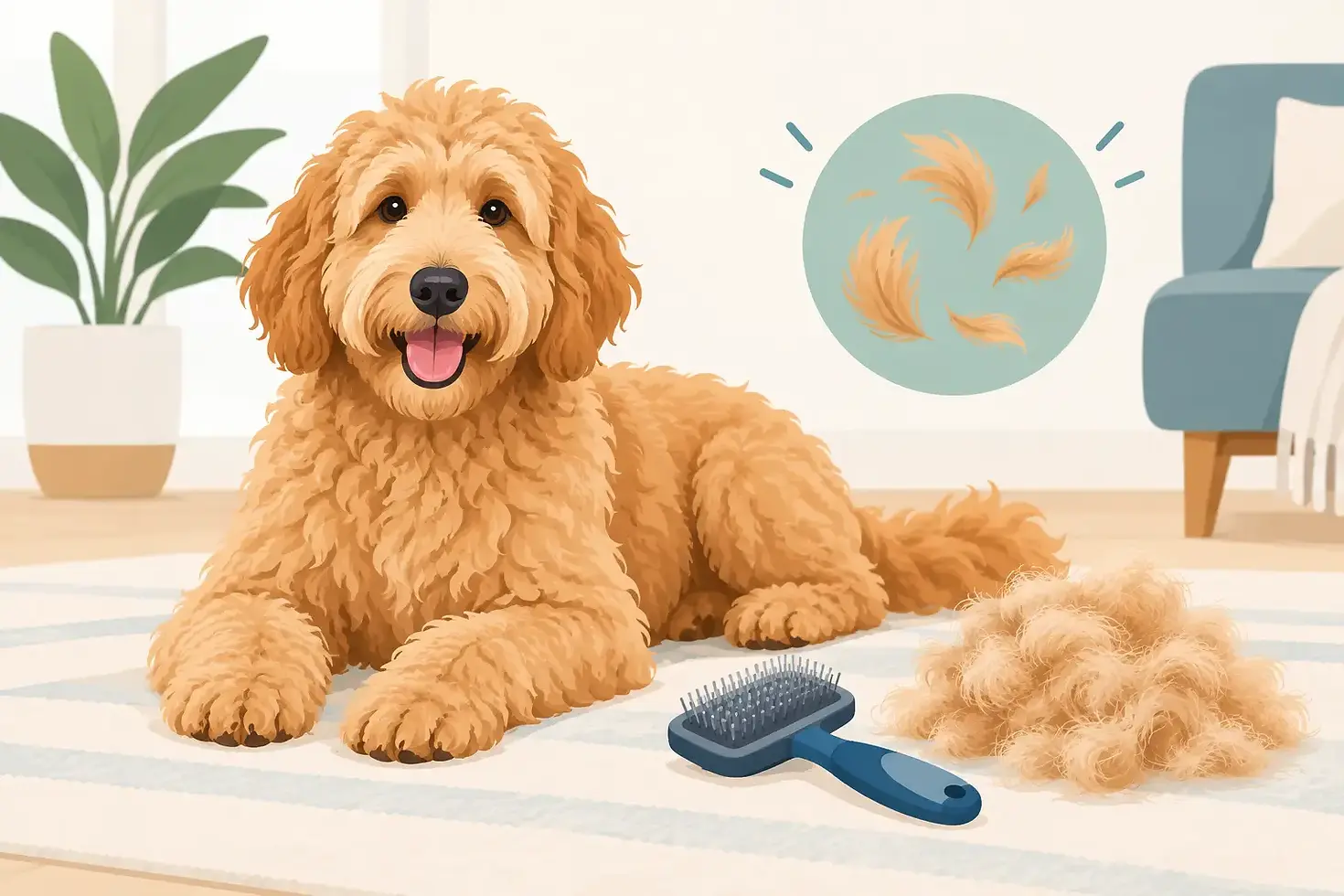
Goldendoodle Shedding FAQ for New Dog Families
A fluffy Goldendoodle puppy can look like the answer to every family's low-shedding dog hopes. But the most honest Goldendoodle shedding FAQ starts here: no breeder can promise that every individual puppy will shed the same way. Goldendoodles can be wonderfully low shedding, but coat type, genetics, grooming, and the puppy's individual development all shape what you will see in your home.
For families considering a petite miniature or micro-mini Goldendoodle, understanding that distinction before bringing a puppy home makes for a happier match. Less hair on the furniture is a real possibility. A completely maintenance-free coat is not.
Do Goldendoodles shed?
Yes, Goldendoodles can shed, although many shed very little compared with many other dogs. They are a cross between a Golden Retriever and a Poodle, and both sides of that family tree matter. Golden Retrievers are known for a heavier shedding coat, while Poodles are generally low shedding. A Goldendoodle may inherit traits closer to either parent or fall somewhere in between.
A puppy with a curlier, furnished coat is often more likely to be low shedding than one with a flatter or straighter coat. Still, appearance alone is not a guarantee. Two puppies in the same litter can have different coat textures and shedding patterns as they mature.
The word “non-shedding” is often used casually, but it can create unrealistic expectations. Every dog loses some hair over time. The better question is how much loose hair you are likely to find around the house and whether the dog is a good fit for your grooming routine and allergy needs.
Is a Goldendoodle hypoallergenic?
No dog is truly hypoallergenic. Allergies are usually triggered by dander, saliva, and urine proteins, not simply by the hair a dog leaves behind. Because many Goldendoodles shed less, they may spread less dander through loose hair, which can make them more comfortable for some allergy-sensitive households. That is not the same as being allergy-proof.
If someone in your family has significant dog allergies, spend time around adult Goldendoodles before making a commitment. Meeting one puppy is helpful for temperament and connection, but an adult dog's coat and dander are more relevant to your long-term experience. Talk with an allergist when symptoms are serious, especially before adding a puppy to a home with children.
Which Goldendoodle coats shed the least?
Coat genetics are more useful than labels such as wavy, curly, or fluffy. Breeders may discuss furnishing genes, curl genes, and the generations behind a litter because these details can help predict the coat a puppy may develop.
Fully furnished Goldendoodles typically have the familiar teddy-bear face, with longer facial hair and a softer overall look. They are commonly associated with lower shedding coats. Puppies with curlier coats may also retain more loose hair within the coat instead of releasing it onto floors and furniture. That sounds convenient, but it creates a trade-off: retained hair can quickly contribute to tangles and mats without consistent brushing.
Straighter or flat-coated puppies may shed more visibly. They can also be easier to brush at home, depending on coat density. Neither coat type is automatically better. The right choice depends on whether your family would rather manage occasional hair in the house or commit to more frequent coat care.
Does generation affect shedding?
It can. An F1 Goldendoodle has one Golden Retriever parent and one Poodle parent, so coat outcomes can vary widely. Backcross and multigenerational Goldendoodles are bred with more generations of intentional coat selection behind them, which can provide greater consistency in a breeding program.
Even then, genetics are probabilities, not promises. Responsible breeders should be open about what they know about the parents' coats, the expected puppy coats, and the range that can naturally occur within a litter. At River Falls Goldendoodles, parent dogs are selected with family temperament and health in mind, alongside the coat traits families often seek.
When do Goldendoodles start shedding?
Many Goldendoodle puppies have a soft, easy-care puppy coat at first. Between roughly six and 12 months, that coat begins transitioning to the adult coat. This is often the stage when families suddenly notice more tangles, more brushing needs, or a small increase in loose hair.
The adult coat may continue changing until around 18 months of age. A puppy who seems almost effortless to groom at four months may need a much more structured routine by their first birthday. That is normal, and it is a good reason to establish positive brushing habits early.
Seasonal changes can affect shedding, too. A Goldendoodle that normally drops very little hair may shed a bit more in spring or fall. Indoor heating, humidity, nutrition, stress, and skin health can also influence the condition of the coat.
How often should a low-shedding Goldendoodle be groomed?
Most Goldendoodles need home brushing several times each week, and some need it daily. Focus on the areas that mat first: behind the ears, under the collar or harness, under the legs, around the tail, and where the legs meet the body. A quick brush over the back is not enough if the undercoat is tangling closer to the skin.
Professional grooming is commonly needed every six to eight weeks, though the ideal schedule depends on coat length, texture, activity level, and the style your family prefers. A shorter trim can make everyday maintenance more manageable, particularly for busy households with young children. A longer, plush teddy-bear trim is beautiful, but it asks more of the family between appointments.
Bathing too frequently can dry the skin and coat, while too little grooming can allow dirt and tangles to build up. Your groomer can help you find a routine that suits your puppy's individual coat. Gentle handling, treats, and short brushing sessions teach a puppy that grooming is simply part of family life.
Can diet affect shedding?
A nutritious, age-appropriate diet supports healthy skin and a healthy coat, but food cannot change a dog's inherited shedding pattern. Sudden excessive shedding, dry flakes, itching, bald spots, or a dull coat deserve a conversation with your veterinarian. Parasites, skin infections, allergies, hormonal conditions, and nutritional concerns can all show up through the coat.
Avoid assuming that every change is a normal seasonal shed. A healthy Goldendoodle should have comfortable skin, clear eyes, normal energy, and a coat that is cared for without painful mats. Supplements may be useful in some situations, but they should be chosen thoughtfully with veterinary guidance rather than as a shortcut for coat genetics or grooming.
What should families ask before choosing a Goldendoodle puppy?
Ask what coat types are expected in the litter and how the breeder evaluates coat traits in the parent dogs. Ask about the grooming needs associated with those coats, not just whether the puppies are described as low shedding. A transparent breeder should also be able to discuss genetic health testing, early socialization, and the temperament of the parents.
It also helps to be honest about your own routine. If your family travels often, has limited time for brushing, or prefers a very short haircut, say so. Personality matching matters just as much as coat expectations. The best companion is not merely the puppy with the curl you pictured, but the puppy whose needs fit comfortably into your family's daily life.
A Goldendoodle's coat can be one of its most charming features, but the relationship beneath that coat is what lasts. Choose with clear expectations, prepare a simple grooming routine before pickup day, and give your puppy patient care as its adult coat comes in.


Comments