





Paw Print Genetics Testing Review for Families
A puppy’s bright eyes, soft coat, and playful personality are what families fall in love with first. But responsible breeding begins long before those first puppy photos. In this Paw Print Genetics testing review, we look at what genetic screening can tell a future Goldendoodle family, what it cannot predict, and why clear health documentation should be part of every breeder conversation.
For families choosing a companion dog, genetic testing is not just a technical detail tucked into a breeder’s paperwork. It is one part of the careful planning that helps breeders make informed pairing decisions, reduce avoidable genetic risk, and provide more transparency about the dogs behind a litter.
What Paw Print Genetics Testing Looks For
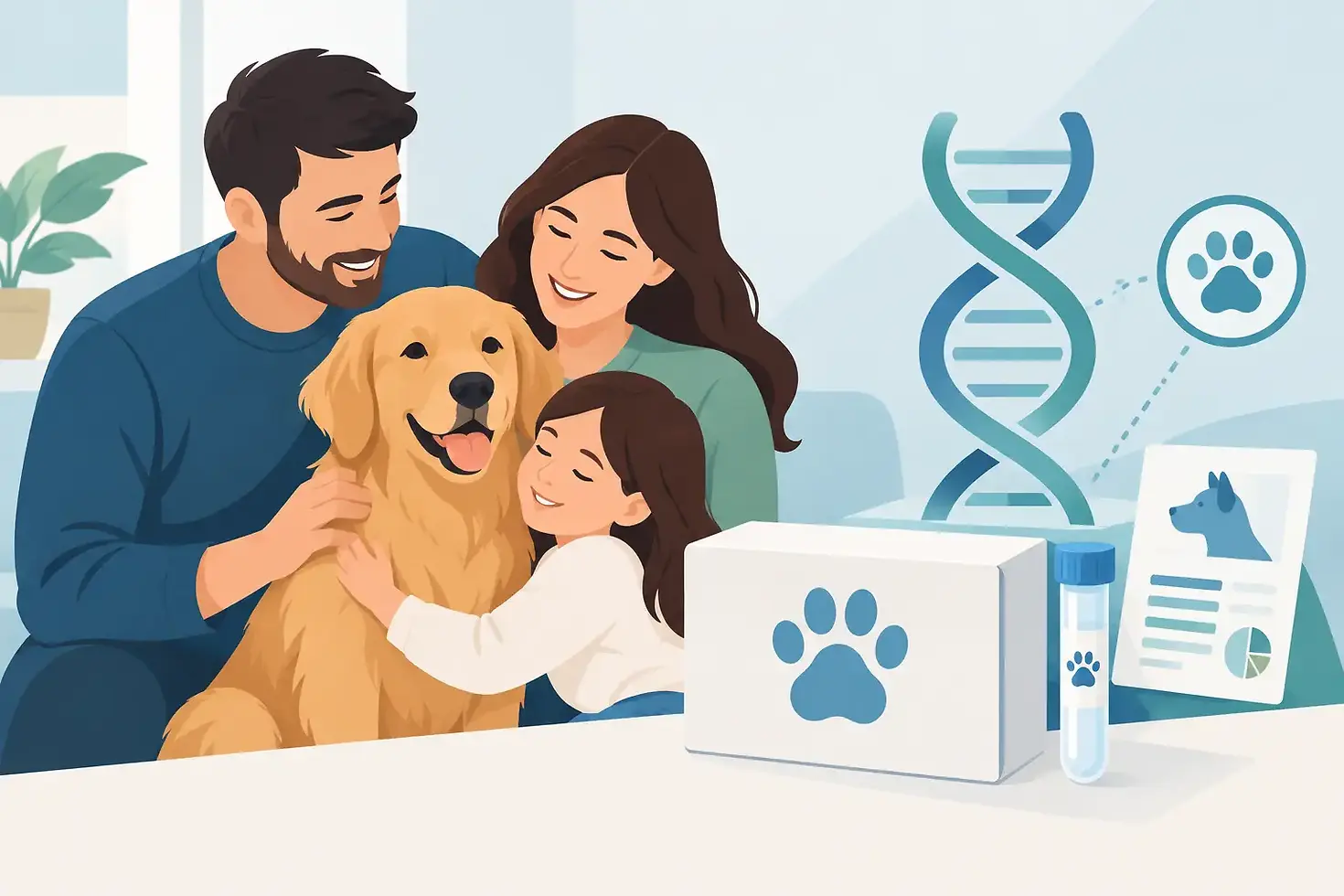
Paw Print Genetics is a canine DNA testing laboratory used by breeders to screen dogs for inherited genetic variants. Depending on the breed mix and the panel selected, a report may identify whether a dog is clear, a carrier, or affected for certain inherited conditions.
For Goldendoodles, this matters because a puppy’s family tree often includes Poodle and Golden Retriever lines, along with the health considerations associated with each. A thoughtful breeder does not assume that a friendly, beautiful, healthy-looking adult dog is automatically free of inherited risks. Many genetic conditions are not visible during a routine exam, especially in a dog that carries one copy of a recessive variant.
A clear result generally means the tested dog did not carry the specific variant included in that test. A carrier has one copy of a recessive variant but is often healthy. An affected result means the dog has inherited a genetic combination associated with that condition. Those distinctions are important because responsible breeding decisions depend on the full picture, not on a single word in a report.
The practical goal is not to find a dog with a flawless-sounding label. It is to avoid pairing two dogs in a way that could produce puppies affected by a known recessive condition. A carrier, for example, may still be a wonderful family dog and may be included in a carefully planned breeding program when matched appropriately with a clear partner.
Our Paw Print Genetics Testing Review: The Value for Families
The strongest part of Paw Print Genetics testing is the added visibility it provides. Families do not need to become geneticists before bringing home a puppy, but they should feel comfortable asking how parent dogs were screened and how the breeder uses those results.
Testing supports better decisions before a litter is ever planned. It can help a breeder identify inherited risks that would otherwise remain hidden, choose pairings thoughtfully, and maintain organized health records. For a family, that preparation is reassuring because it shows that a breeder is looking beyond coat color, size, and current demand.
It also creates a more meaningful conversation around health guarantees. A guarantee is valuable, but it should not be the only health-related promise a breeder makes. Preventive practices matter too: genetic screening, appropriate veterinary care, health evaluations, careful selection of parent dogs, and a willingness to explain the program in plain language.
At River Falls Goldendoodles, genetic testing through Paw Print Genetics is part of a larger responsible-breeding standard. The parent dogs are chosen with health and companion temperament in mind, while puppies are raised with early family interaction and support for the people preparing to welcome them home.
That larger approach is especially helpful for first-time doodle owners. A DNA report alone cannot tell you whether a puppy has been gently handled, exposed to normal home activity, or thoughtfully matched to your household. It should sit alongside those important pieces, not replace them.
What a DNA Test Cannot Promise
Genetic testing is powerful, but it has limits. A Paw Print Genetics report only addresses the variants included in the panel or test ordered. It cannot test for every possible inherited condition, every future health concern, or every factor that affects a dog’s lifetime wellness.
Environment also matters. Nutrition, weight management, exercise, preventive veterinary care, training, and everyday safety all influence a dog’s well-being. A puppy from thoroughly tested parents still needs a committed family, routine checkups, and age-appropriate care.
DNA testing also does not replace other health screening. Certain concerns may require orthopedic evaluations, eye examinations, cardiac screening, or other assessments recommended for the breeds in a dog’s background. A responsible breeder considers the screenings that fit the individual dogs and the breeding program rather than relying on one test alone.
Temperament is another area where families should keep a balanced perspective. Genetics can influence temperament, but early socialization, parenting, puppy development, and the relationship a dog builds with its family all play a role. A well-bred Goldendoodle should have a solid foundation for companionship, but every puppy is still an individual.
How to Read Results Without Getting Overwhelmed
When you review health information, begin with a simple question: does the breeder understand and responsibly use the results? Clear communication is often more valuable than a stack of technical pages without context.
Clear, Carrier, and Affected Results
A breeder should be able to explain whether each parent is clear, a carrier, or affected for the conditions tested, and why the pairing was selected. Do not assume that “carrier” means unhealthy or unsuitable. For many recessive conditions, a carrier dog is healthy and does not develop the condition being screened for.
What matters is the match. Two carrier dogs for the same recessive variant should not be bred together, because affected puppies could result. Pairing a carrier with a clear dog can prevent puppies from being genetically affected by that particular condition, though some puppies may also be carriers.
If this feels complicated, that is normal. The right breeder should welcome respectful questions and explain the answer without making you feel rushed or embarrassed.
Ask About the Whole Health Plan
A helpful conversation goes beyond, “Were the parents tested?” Ask what testing was completed, whether the breeder can discuss the results, what other health evaluations are used, and how dogs are selected for sound family temperament.
You can also ask how puppies are raised during their first weeks of life. Gentle handling, appropriate exposure to household routines, and early communication with adopting families all help tell the story of how a breeder approaches companion-dog placement.
A breeder who is transparent about both strengths and limits is usually offering something more valuable than a perfect sales pitch. Health testing is a meaningful safeguard, but no ethical breeder can promise that a living animal will never face a health concern.
Why Testing Matters More in a Family Companion Program
Families often want a Goldendoodle because they imagine the everyday moments: a child reading beside the dog on the couch, neighborhood walks, weekend trips, and a cheerful greeting at the door. Those moments are supported by responsible choices made well before adoption day.
A carefully planned breeding program considers the traits families live with every day. Health is central, but so are stable temperaments, trainability, size expectations, coat considerations, and the ability to thrive as an involved household companion. This is particularly important for petite miniature and micro-mini Goldendoodles, where families may be looking for a smaller dog without sacrificing the affectionate, people-oriented nature they love.
No breeder can control every outcome, and no test can predict an entire lifetime. Still, documented genetic screening gives families a clearer starting point than vague assurances. It shows that a breeder has invested in knowledge, recordkeeping, and better decision-making for future litters.
The best question is not whether a breeder can make an impossible promise. It is whether they can show you the care, testing, communication, and long-term responsibility behind the puppy they are asking you to welcome into your family.


Comments